
Jobs That Pay Weekly or Daily: Where to Find Them
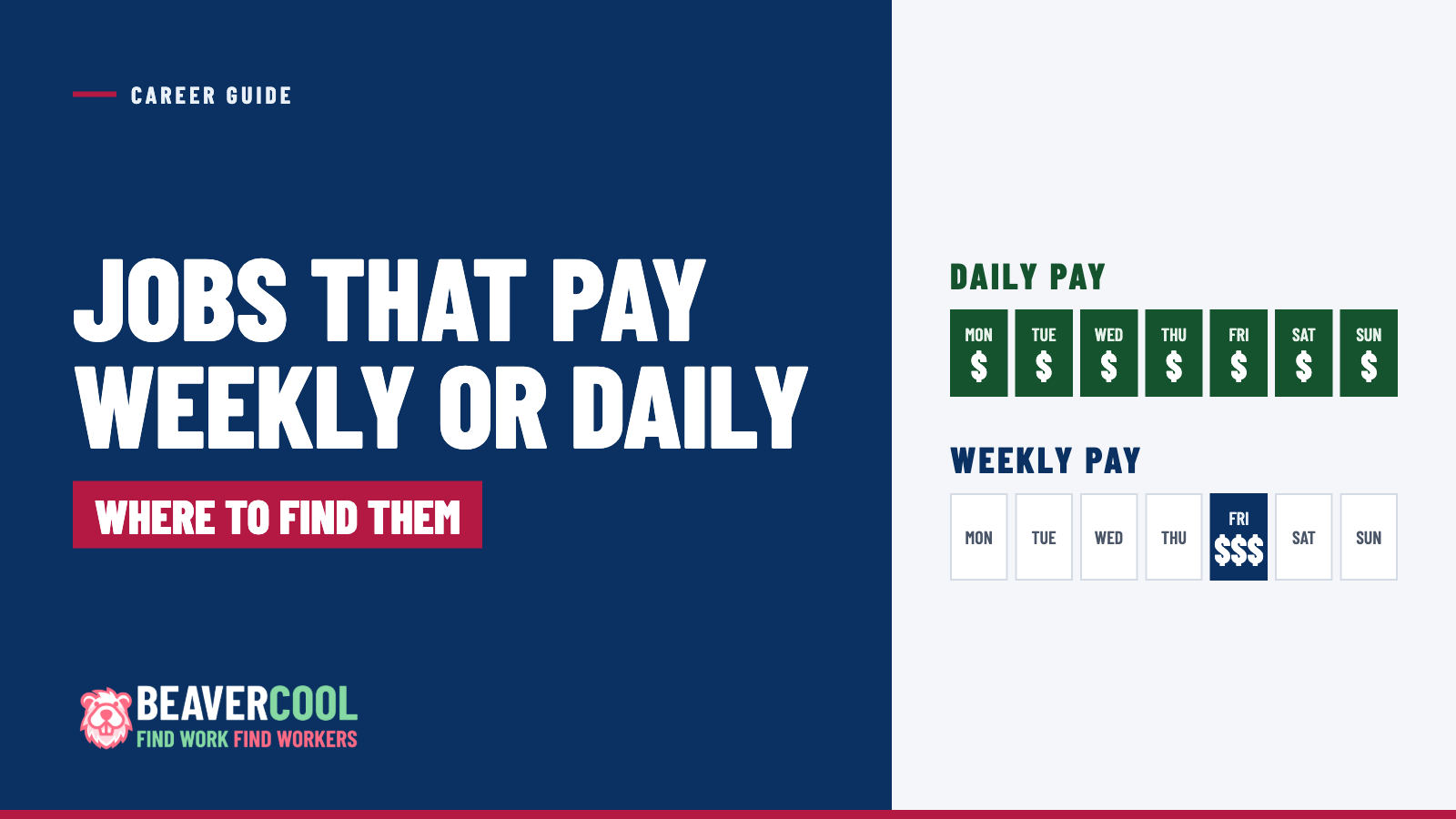
Waiting two weeks or longer for a paycheck isn't always an option. Maybe rent is coming up, your savings are running low, or you simply prefer to have money available as you earn it. Whatever the reason, finding a job with a short pay cycle can make a real difference.
The good news is that plenty of employers pay weekly, and some offer daily pay or access to earned wages before payday. These opportunities are common in industries such as warehousing, cleaning, construction, hospitality, delivery, and temporary staffing.
However, there's an important distinction: getting paid daily isn't the same as getting hired daily. Some companies pay employees after every shift, while others pay weekly or offer early access to money you've already earned. Understanding the difference can help you avoid misleading job ads and find work that fits your financial needs.
What Jobs Pay Weekly or Daily?
Your best options depend on whether you need a regular paycheck every week or money as soon as you finish a shift.
Weekly pay is common in hourly jobs, particularly in industries with large workforces and changing schedules. Daily pay is less widespread, but you may find it through staffing agencies, event work, certain gig platforms, and employers that offer earned wage access.
Here are several places to start looking.
1. Warehouse and Distribution Jobs
Warehouses are worth checking if you need steady work and don't want to spend months qualifying for a new career. Employers hire workers to pack orders, unload trucks, sort products, move inventory, and prepare shipments.
Many warehouse positions are hourly, and some employers pay weekly. Temporary staffing agencies can also connect workers with short-term assignments at distribution centers.
Typical roles include:
- Warehouse associate
- Order picker and packer
- Shipping and receiving clerk
- Forklift operator
- Inventory assistant
Pay schedules vary by employer. A temporary agency may have a weekly payroll, while a permanent position might pay every two weeks.
If you're looking for this type of work, browse logistics and warehousing jobs to explore relevant openings.
One thing to check before accepting an offer is the first payday. Even when an employer pays weekly, you may need to wait until the next payroll cycle after starting.
2. Cleaning and Maintenance Jobs
Cleaning can be a practical option if you want work that doesn't always require a degree or extensive previous experience. Offices, hotels, apartment buildings, commercial properties, and cleaning companies regularly need people to maintain their facilities.
Some businesses hire cleaners directly, while others use contractors or staffing agencies. The arrangement affects both the payment schedule and the way you're paid.
Possible positions include:
- Office cleaner
- House cleaner
- Janitorial worker
- Hotel housekeeping attendant
- Building maintenance assistant
Commercial cleaning companies may offer a consistent schedule and weekly payroll. Independent cleaning arrangements can sometimes provide faster payment, but the terms should be agreed upon in advance.
If you're considering this field, start with cleaning and maintenance jobs.
Before taking a job, clarify whether you're an employee or an independent contractor. Contractors may need to cover their own transportation, equipment, supplies, and taxes, which can reduce the amount they actually keep.
3. Construction and General Labor
Construction companies often need additional workers for site preparation, material handling, demolition, cleanup, and other labor-intensive tasks. Some projects need help for only a few days, while others offer longer assignments.
General labor positions may be accessible without a college degree. Requirements depend on the work, and employers may expect safety training, protective equipment, physical fitness, or previous construction experience.
Payment schedules differ. Some contractors and staffing agencies pay weekly, while certain short-term arrangements may pay at the end of a completed assignment. Daily payment is possible in some situations, but it shouldn't be assumed.
If you need money quickly, ask these questions before starting:
- When will I receive my first payment?
- Is the job paid hourly, daily, or by the completed task?
- Are overtime hours paid separately?
- Will I need to provide my own tools or transportation?
A job that advertises a high daily rate may be less attractive once unpaid travel, equipment expenses, or gaps between projects are taken into account.
4. Restaurant and Hospitality Jobs
Restaurants, hotels, catering companies, and event venues hire people for a variety of shifts. Depending on the employer, you may find work as a dishwasher, kitchen assistant, server, banquet worker, hotel housekeeper, or event setup worker.
These jobs can be useful if you need flexible hours or want to start earning without a lengthy hiring process.
Some hospitality workers receive tips during or shortly after a shift. However, tips are not the same as wages, and the timing of tip payments depends on the employer's policy and local law. Regular wages may still follow a weekly or biweekly payroll schedule.
Temporary event work can sometimes offer a faster route to payment than a permanent position. Read the assignment details carefully, particularly if the job is advertised as same-day work.
5. Delivery and Gig Work
Delivery work can offer more flexibility than a traditional hourly job. Depending on the platform and your location, you may be able to choose when to work and request faster payouts.
Potential opportunities include food delivery, grocery delivery, package delivery, and courier services.
The main attraction is flexibility, but there are trade-offs. Some platforms offer instant cash-out for eligible workers, often subject to fees or account requirements. Others use scheduled payouts. Approval times, availability, and payment terms vary.
Remember that the amount shown in an app isn't necessarily your take-home income. Fuel, vehicle maintenance, insurance, parking, and taxes can all affect your earnings.
Before signing up, check whether the platform operates in your area, how quickly new workers are approved, and what conditions apply to withdrawals.
6. Temporary Staffing Agencies
If you need work soon, a staffing agency can be a useful starting point. These agencies connect workers with businesses that need temporary, seasonal, or contract help.
Assignments may involve warehouse operations, cleaning, manufacturing, office support, hospitality, or general labor. Some placements last a single shift, while others can continue for several months.
Staffing agencies are also worth considering because they can explain the pay schedule before you accept an assignment. Weekly payroll is common at some agencies, although policies differ.
When contacting an agency, ask whether it has immediate openings, what documents you need, and when payment is issued after your first shift. Also confirm whether the agency or the company where you'll work is responsible for paying you.
7. Jobs That Offer Same-Day or Daily Pay
If you specifically need jobs paying daily, look for opportunities where the payment arrangement is clearly stated before you begin working.
These may include certain event staffing assignments, short-term labor jobs, independent cleaning work, and local gigs. Some businesses pay after a completed shift or task, while others pay through an app or staffing provider.
There are two details to keep in mind.
First, a job advertised as "daily pay" may mean you can access part of your earned wages each day rather than receive your entire paycheck. Second, some employers use third-party payment services, which may charge fees or impose withdrawal limits.
Always confirm the exact terms in writing. Don't rely solely on a social media post or a recruiter's verbal promise.
How to Find Jobs Paying Weekly
If weekly pay is your priority, focus your search on employers that publish their payroll schedule or can confirm it during the hiring process.
Here are a few practical ways to search:
Use specific search terms. Try phrases such as "weekly pay warehouse jobs," "weekly pay cleaning jobs," "temporary jobs with weekly pay," and "same-day pay jobs near me."
Check job listings carefully. Look for information about payroll frequency, employment type, shift availability, and the expected start date. If pay frequency isn't mentioned, ask the employer.
Contact staffing agencies directly. Instead of applying to every listing you find, tell the recruiter what kind of work you can do, when you're available, and how soon you need to start.
Apply to several suitable openings. A job may advertise immediate hiring but still require screening, onboarding, or a background check. Applying to multiple legitimate employers gives you more options.
Verify the first payday. Weekly pay doesn't always mean you'll receive money seven days after your first shift. Payroll cutoffs and processing times can create a longer initial wait.
Daily Pay vs. Weekly Pay: What's the Difference?
Daily Pay
Wages are paid after a shift or according to a daily payment schedule. Before accepting a job, confirm that payment is actually guaranteed that day.
Weekly Pay
You receive wages once a week. Check the payroll cutoff date and ask when your first paycheck will arrive.
Biweekly Pay
You receive wages every two weeks. This schedule is common with many employers, so confirm how long you'll wait for your first payment.
Earned Wage Access
Some employers let you withdraw part of the wages you've already earned before your regular payday. Check for withdrawal limits, fees, and eligibility requirements.
Gig Platform Payouts
Delivery and other gig platforms process payments according to their own rules. Check transfer fees, processing times, and whether instant payouts are available for your account.
A faster payment schedule doesn't automatically mean a higher income. If two jobs offer similar hourly wages, compare their hours, commute, benefits, expenses, and reliability as well as their payroll frequency.
How to Avoid Scams When Looking for Fast-Paying Jobs
When money is tight, an offer promising immediate payment can be tempting. Unfortunately, scammers often use urgent hiring claims to pressure people into handing over money or personal information.
Be cautious if a recruiter asks you to pay an upfront fee to secure a job, deposit a check and send part of the money elsewhere, or purchase equipment from a specific seller before you've verified the employer.
Other warning signs include vague job duties, unusually high earnings for minimal work, and pressure to share sensitive financial information through an unofficial channel.
Legitimate employers may need tax documents, identity verification, or banking details during onboarding. Provide them only through a verified hiring process, and never share your bank password or verification codes.
If a position promises daily payment, ask for the written pay terms before you start. A legitimate employer should be able to explain how much you'll earn, when you'll be paid, and whether any fees or deductions apply.
Final Thoughts
If you need a paycheck quickly, start with industries that regularly hire hourly and temporary workers. Warehousing, cleaning, construction, hospitality, and delivery are all worth exploring, depending on your experience and local opportunities.
Weekly pay is generally easier to find than guaranteed daily wages. If you need money immediately, look specifically for employers that confirm same-day payment or platforms that offer eligible workers faster access to their earnings.
Most importantly, check the actual payment terms before accepting a job. Knowing when you'll be paid, what deductions apply, and how much you'll take home can help you choose work that solves your immediate problem without creating another one.
Frequently asked questions
What jobs pay weekly with no experience?
Warehouse associates, cleaners, restaurant workers, general laborers, and some temporary employees may be able to find entry-level jobs that pay weekly. Requirements and wages vary by employer, so check the listing and confirm the payroll schedule before accepting an offer.