
How to Become a Truck Driver With No Experience
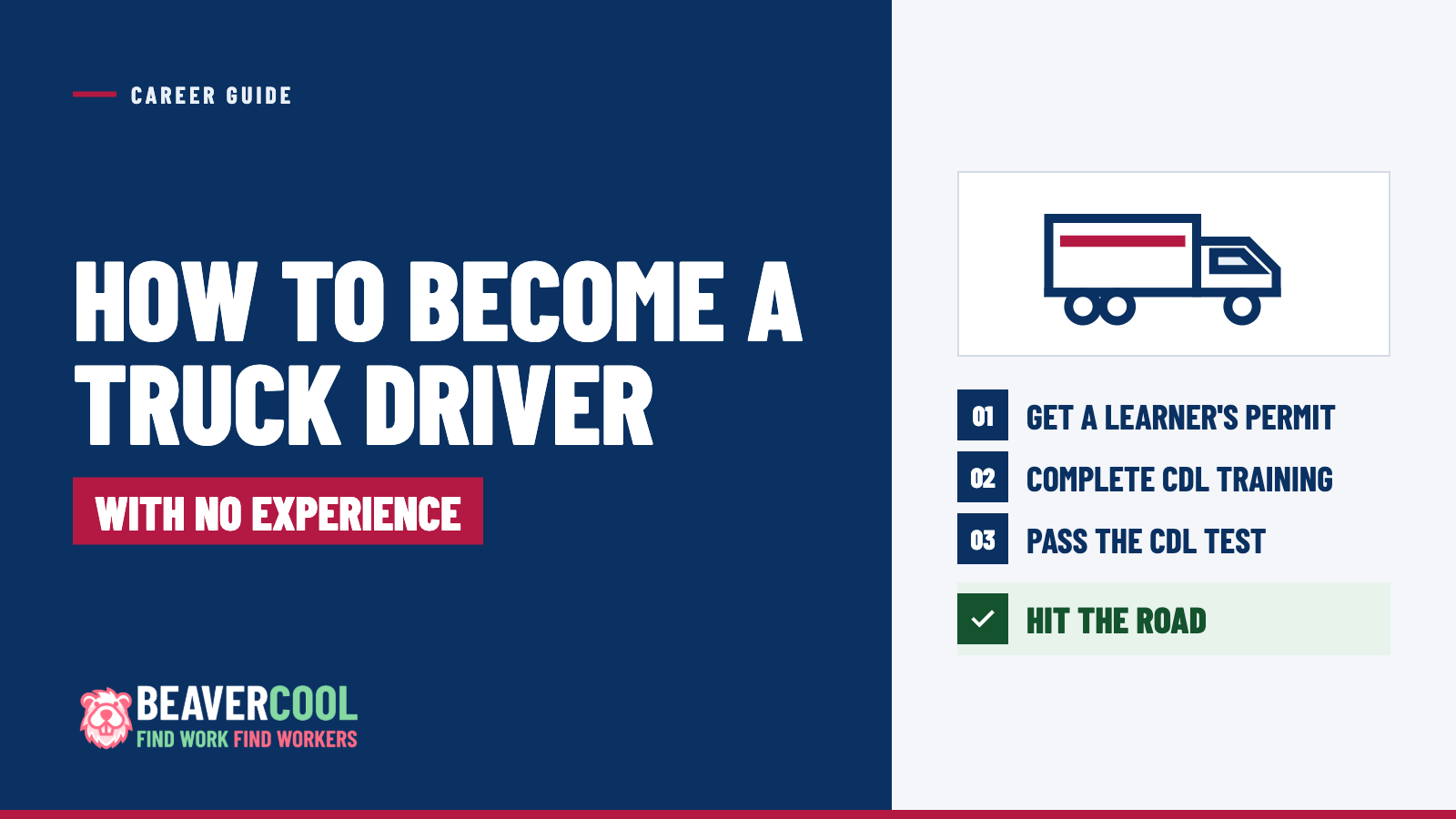
Getting into trucking can seem difficult when every job listing asks for experience. You need a job to gain experience, but you can't get the job without it. The good news is that the U.S. trucking industry has entry-level opportunities for people who are willing to train, earn a Commercial Driver's License (CDL), and learn the job from experienced drivers.
You don't need a college degree to become a truck driver. However, driving a commercial truck requires more preparation than simply getting behind the wheel. You'll need to meet licensing requirements, pass the necessary tests, and find an employer willing to work with new drivers.
If you're searching for truck driver jobs no experience, this guide explains how to get started, what training may cost, where to find entry-level positions, and what to check before accepting your first trucking job.
Can You Become a Truck Driver With No Experience?
Yes. Many trucking companies hire new CDL holders who haven't worked as professional truck drivers before. These positions are often advertised as entry-level, trainee, student driver, or CDL training jobs.
The important distinction is between having no trucking experience and having no CDL. Most commercial truck driving jobs require the appropriate commercial license. Some training programs help qualified applicants earn that license, while others expect you to obtain it before applying.
Your options generally fall into three categories:
- Company-sponsored CDL training: An employer helps you obtain your CDL, sometimes in exchange for an employment commitment.
- Driving school followed by a job: You complete training independently and then apply to companies that hire recent graduates.
- Entry-level CDL jobs: You already have your CDL but need an employer that accepts inexperienced drivers.
Each route has different costs, requirements, and trade-offs. The best choice depends on your finances, eligibility, and how quickly you want to start working.
Step 1: Check the Basic Requirements
Before paying for training or submitting applications, make sure you meet the basic requirements for commercial driving in the United States.
Age requirements
Federal rules generally require drivers to be at least 21 to operate commercial motor vehicles in interstate commerce. Drivers aged 18–20 may qualify for certain intrastate commercial driving jobs, depending on state law and the type of vehicle.
If your goal is long-haul trucking across state lines, turning 21 is an important milestone.
Driver's license and driving record
You'll generally need a valid driver's license and must meet the applicable requirements for obtaining a commercial license. Employers may review your driving record and may have additional standards for accidents, violations, or previous license suspensions.
A clean record can make it easier to qualify for training and employment, although each company sets its own hiring criteria.
Medical qualification
Most commercial drivers operating vehicles that require a CDL must meet applicable federal medical qualification standards. This typically involves a medical examination by a certified medical examiner.
Certain medical conditions or medications may require additional evaluation. Check the current requirements before making a financial commitment to training.
English proficiency
Commercial drivers must meet applicable English-language proficiency requirements for operating commercial motor vehicles. You should be able to understand road signs, communicate with officials, and respond appropriately to questions and instructions.
Background and eligibility checks
Employers may review employment history, driving records, and other information relevant to the position. Some jobs, such as those involving hazardous materials, have additional requirements.
If you're unsure whether you qualify, check with your state driver licensing agency and the training provider before enrolling.
Step 2: Get Your Commercial Driver's License (CDL)
A CDL is the main qualification you'll need for most professional truck driving jobs. The process varies by state, but it generally follows several stages.
Choose the right CDL class
For many tractor-trailer and long-haul trucking positions, you'll need a Class A CDL. It generally covers combinations of vehicles with a gross combination weight rating of 26,001 pounds or more when the towed vehicle exceeds 10,000 pounds.
A Class B CDL is typically used for certain heavy single vehicles, such as some straight trucks and buses.
Choose your training based on the type of driving you want to do. If your goal is long-haul tractor-trailer work, Class A training is usually the relevant path.
Obtain a commercial learner's permit
Before practicing in a commercial vehicle, you'll generally need a Commercial Learner's Permit (CLP). This involves meeting state requirements and passing the applicable knowledge tests.
A learner's permit allows you to practice driving a commercial vehicle under the required supervision. It does not authorize you to drive a commercial truck independently.
Complete required entry-level driver training
For applicants seeking their first Class A or Class B CDL, or certain endorsements, federal Entry-Level Driver Training (ELDT) requirements may apply.
Training must be completed through a provider listed on the Federal Motor Carrier Safety Administration's Training Provider Registry when required. Your state licensing agency can explain the testing and licensing steps that follow.
Pass the CDL skills test
The licensing process typically includes a vehicle inspection test, basic vehicle control, and an on-road driving test. Exact procedures and scheduling depend on your state.
Once you meet the applicable requirements and pass the necessary tests, you can obtain your CDL.
For official information, consult the Federal Motor Carrier Safety Administration (FMCSA) and your state's commercial driver's licensing agency.
Step 3: Decide How to Pay for CDL Training
Training is one of the biggest decisions you'll make when entering the trucking industry. You can pay for school yourself, look for financial assistance, or apply to a company that offers sponsored training.
Option 1: Attend a private CDL school
A private driving school lets you complete training before applying for trucking jobs. This approach gives you more freedom to compare employers after you earn your CDL.
The downside is the upfront cost. Tuition varies considerably by school and state, and you may also need to pay for licensing, testing, transportation, and living expenses while training.
Before enrolling, ask how much the entire program costs, how much actual driving time is included, and whether the school provides job placement assistance.
Option 2: Apply for company-sponsored training
Some trucking companies recruit applicants who don't have a CDL and help them complete the training process.
Depending on the program, the company may cover some or all of the training cost. In return, you may be required to work for that employer for a specified period or repay some costs if you leave early.
Read the agreement carefully. Find out whether lodging and transportation are covered, when paid employment begins, how long the commitment lasts, and what happens if you fail a test or leave the program.
Sponsored training can reduce the upfront financial burden, but it doesn't mean the training is completely free under every circumstance.
Option 3: Look for workforce funding
Depending on your location and eligibility, state workforce agencies or local training programs may offer assistance with occupational training, including commercial driving.
Funding availability changes by program, and not every school or applicant qualifies. Contact your local American Job Center or state workforce agency to ask about approved CDL programs and financial assistance.
Step 4: Find Truck Driver Jobs With No Experience
Once you have your CDL, your goal is to find a company that hires new drivers rather than requiring months or years of professional experience.
Search for job listings using terms such as:
- Entry-level CDL driver
- Class A CDL trainee
- Student truck driver
- Recent CDL graduate
- No experience CDL jobs
- Paid CDL training
- Company driver trainee
You can also browse transportation jobs on BeaverCool to explore driving opportunities.
Don't rely on the job title alone. Some listings use phrases such as "no experience required" but still expect a recently issued CDL, a minimum age, or a particular driving record. Read the full requirements and contact the recruiter if anything is unclear.
Look for employers with structured training
Your first employer matters because you'll be learning how to handle a commercial vehicle in real working conditions.
Ask whether the company provides an orientation, supervised driving, or a formal period with an experienced driver. Find out how long the training lasts and how your progress is evaluated.
A company with a clear training process may be a better starting point than one that simply promises high earnings without explaining how new drivers are supported.
Consider different types of trucking jobs
Long-haul trucking is only one option. Depending on your location and qualifications, you might also find opportunities in regional transportation, local delivery, dedicated routes, or certain straight-truck positions.
Each has different requirements and working conditions. Long-haul drivers may spend days or weeks away from home, while local jobs may offer more regular returns home but can have early starts and frequent stops.
Compare the schedule, pay structure, equipment, and training arrangements rather than choosing based on the advertised salary alone.
Step 5: Understand How Much New Truck Drivers Can Earn
Truck driving income varies by employer, location, route, equipment, experience, and pay structure. A new driver should not assume they'll earn the same amount as an experienced driver with a strong safety record.
Companies may pay by the mile, by the hour, by the load, or through a combination of wages and bonuses.
When reviewing an offer, pay attention to:
- Base compensation: Is pay calculated by the mile, hour, load, or week?
- Training pay: How much will you earn during orientation and supervised driving?
- Guaranteed minimums: Does the employer guarantee a minimum amount of work or income?
- Bonuses: Are advertised bonuses guaranteed, or do they depend on specific conditions?
- Unpaid time: How are waiting, loading, breakdowns, and delays handled?
- Deductions: Could you owe money for training, equipment, or other expenses under the agreement?
For example, an advertised weekly amount may assume a certain number of miles, completed loads, or eligible bonuses. If those conditions aren't met, actual earnings can be lower.
Ask the recruiter to explain a realistic first-year pay range for a new driver, not just the highest amount an experienced driver might earn.
Step 6: Know What to Expect During Your First Year
Your first year is about more than learning how to operate a truck. You'll also learn how to plan routes, manage time, communicate with dispatchers, inspect equipment, handle paperwork, and follow safety procedures.
Your first weeks
Many entry-level drivers complete orientation and may spend time driving with a trainer. You'll learn company procedures, trip planning, vehicle inspections, and how to handle common situations on the road.
The exact training arrangement depends on the employer and type of job.
Building confidence and experience
At first, tasks that experienced drivers handle automatically may take more time. Backing into tight spaces, navigating unfamiliar locations, and managing delivery schedules can be challenging.
Ask questions, follow procedures, and take feedback seriously. Safe, consistent driving is more valuable than trying to prove you can do everything immediately.
Developing a strong work record
Your safety record, reliability, communication, and ability to follow instructions can influence future opportunities.
As you gain experience, you may qualify for different routes, specialized freight, or positions with other employers. Additional endorsements may open more options, depending on the type of trucking work you're interested in.
Common Mistakes to Avoid When Applying for CDL Jobs
Getting your first trucking job can take persistence, but a few mistakes can make the process more expensive or difficult than necessary.
Paying for training before researching employers. Some companies offer training programs for eligible applicants. Compare the total costs and commitments before paying tuition yourself.
Ignoring contract terms. A sponsored program may include a work commitment or repayment clause. Understand the conditions before signing.
Focusing only on advertised pay. High earnings may depend on mileage, bonuses, experience, or other conditions. Ask what new drivers typically earn.
Applying without checking the requirements. Age, license class, driving history, medical qualification, and endorsements can affect eligibility.
Accepting an offer without understanding the schedule. Find out how long you're expected to stay on the road, whether routes are local or long-haul, and how home time works.
Overlooking the training arrangement. Ask who supervises you, how long training lasts, and what happens if you need more practice before driving independently.
Final Thoughts
Starting a trucking career without experience is possible, but it takes planning. First, check that you meet the basic requirements. Then compare CDL schools, company-sponsored training, and available financial assistance before deciding how to get licensed.
Once you have the appropriate CDL, focus on employers that accept new drivers and offer a clear training process. Read the pay terms carefully, ask about home time, and understand any training commitments before signing an agreement.
Your first job may not offer the highest advertised earnings, but it can help you build the experience and safety record needed for better opportunities. Start by exploring transportation jobs on BeaverCool and comparing entry-level openings that match your qualifications.