
Types of Truck Driving Jobs: Box, Dump, Flatbed, Tanker, Team
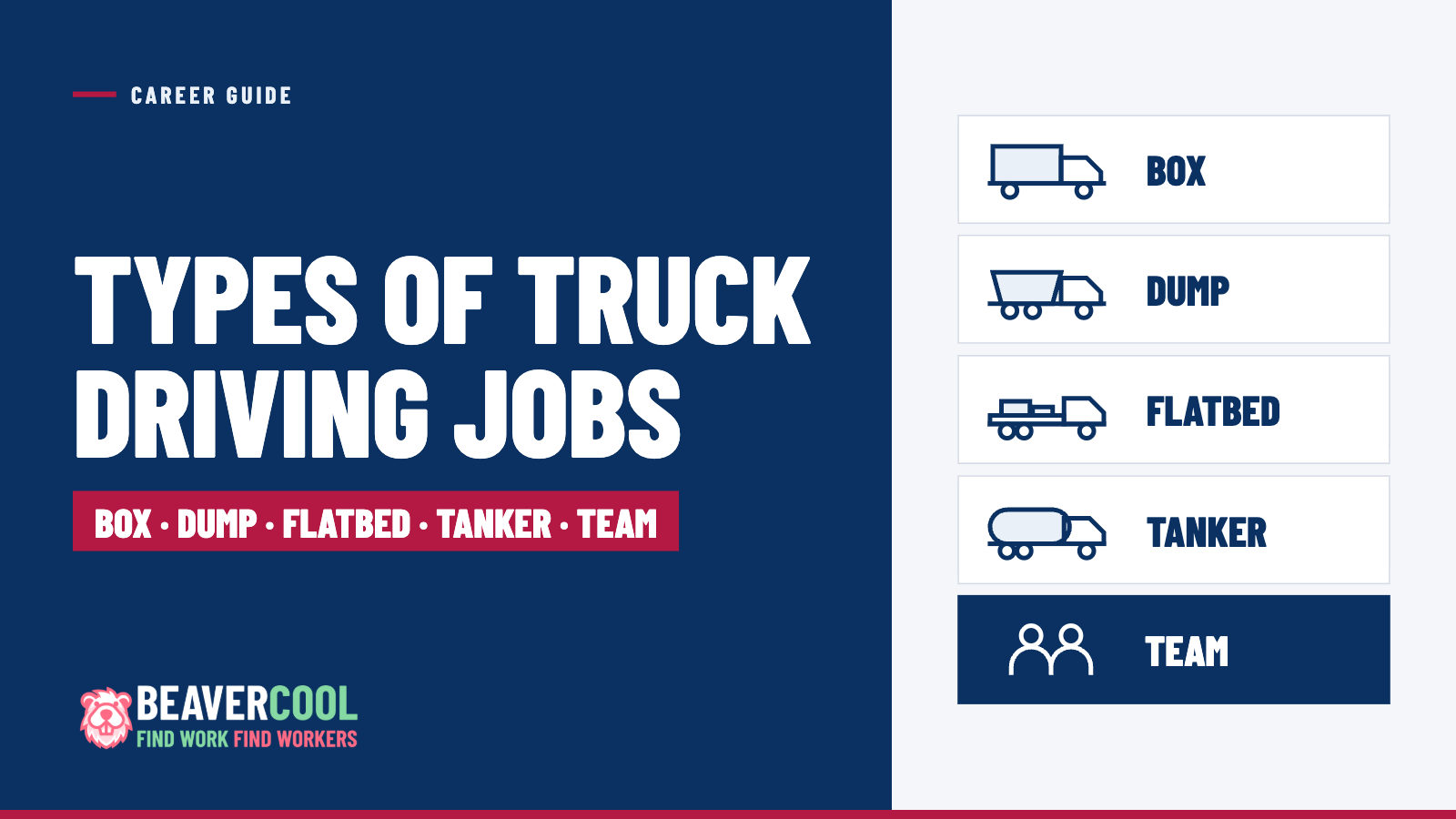
Truck driving isn't one-size-fits-all. Some drivers spend their days making local deliveries, while others haul construction materials, transport fuel, or drive across the country with a partner. The work, schedule, and qualifications can look very different depending on the type of truck you drive.
If you're thinking about getting into trucking or looking for a change, it helps to know what each job actually involves. Here's a closer look at five common options, including the licenses you may need and what to consider before applying.
1. Box Truck Driver Jobs
Box truck drivers deliver goods to homes, businesses, warehouses, and retail stores. Their trucks have an enclosed cargo area, making them a common choice for furniture deliveries, appliances, commercial supplies, and local freight.
Most box truck jobs involve more than driving. Depending on the company, you might make several stops a day, load or unload items, collect delivery signatures, and keep customers updated on arrival times.
What to expect:
- Local or regional routes, often with multiple stops.
- Loading and unloading, depending on the job.
- Regular communication with dispatchers and customers.
- Daily vehicle inspections and delivery paperwork.
One reason people look for box truck driver jobs is that some positions don't require a CDL. Smaller trucks can often be driven with a standard license, depending on their weight rating and applicable rules. Larger vehicles may require a commercial driver's license.
Experience requirements also vary. Some employers are willing to train new drivers, while others want previous delivery or commercial driving experience.
Box truck work can be a good fit if you prefer staying close to home rather than spending several nights a week on the road. Just check the physical demands and schedule before accepting an offer. Some delivery jobs involve heavy lifting and early starts.
2. Dump Truck Driver Jobs
If you've ever passed a construction site and seen trucks carrying dirt, gravel, or asphalt, you've seen dump truck drivers at work.
They move materials between construction sites, quarries, road projects, and disposal facilities. Many jobs are local, and drivers may make several trips during a single shift.
The work can be straightforward once you know the routine, but operating a heavy truck around construction equipment and busy job sites requires attention and good judgment.
Typical responsibilities include:
- Hauling sand, gravel, soil, asphalt, or debris.
- Checking the truck before starting work.
- Positioning the vehicle for loading and unloading.
- Operating the dump mechanism safely.
- Following site instructions and traffic rules.
Most heavy dump truck jobs require a Class B CDL. If the truck operates with a qualifying trailer, a Class A CDL may be necessary. The correct license depends on the vehicle and combination.
Construction experience can help, but it's not always required. Some employers hire drivers with the right license and provide job-specific training.
The schedule depends heavily on the employer and project. You might work early mornings on road construction, longer hours during busy periods, or a more predictable weekday schedule. In colder regions, some positions slow down during winter.
If you'd rather work locally and don't want to spend your weeks driving interstate routes, dump truck driving is worth considering.
3. Flatbed Truck Driver Jobs
Flatbed trucks carry cargo on an open platform instead of inside an enclosed trailer. Common loads include lumber, steel, pipes, roofing materials, machinery, and construction equipment.
The biggest difference from other trucking jobs is cargo securement. Drivers may need to use chains, straps, tarps, and other equipment to make sure a load stays in place throughout the trip.
That means flatbed work can involve more physical effort than hauling freight in an enclosed trailer. Weather can also make loading and securing cargo more challenging.
A typical flatbed job may involve:
- Transporting building materials or industrial freight.
- Securing cargo before departure.
- Checking straps and other securement equipment during the trip.
- Tarping loads when required.
- Communicating with shippers, receivers, and dispatchers.
Most tractor-trailer flatbed positions require a Class A CDL. Depending on the cargo and route, additional permits or endorsements may apply.
You don't necessarily need years of flatbed experience to get started. Some companies train qualified CDL drivers who are new to this type of hauling. Others prefer applicants who already understand cargo securement and have experience with heavy freight.
Flatbed jobs can offer competitive pay, especially for drivers who handle specialized loads or work demanding routes. But compare the actual duties and compensation carefully. A higher advertised rate may come with more physical work, longer trips, or additional responsibilities.
4. Tanker Truck Driver Jobs
Tanker drivers transport liquids and other bulk materials in specialized tanks. Depending on the company, that could mean fuel, milk, industrial liquids, or certain chemicals.
This type of driving requires a different level of attention to the cargo. Liquids can shift inside a tank while the truck is moving, which affects handling and braking. Some loads also require strict procedures for loading, unloading, and safety.
The job may include:
- Inspecting the truck and tank before a trip.
- Following loading and unloading procedures.
- Checking delivery documents.
- Monitoring the condition of equipment.
- Following safety rules specific to the cargo.
License requirements depend on the vehicle. Many tractor-trailer tanker jobs require a Class A CDL, while some straight-truck positions may require a Class B CDL. A tanker endorsement is required for qualifying vehicles, and transporting regulated hazardous materials may require a hazmat endorsement as well.
Some tanker employers hire drivers who already have commercial driving experience. Others may consider newer CDL holders, provided they meet the company's training and insurance requirements.
Pay can be attractive in specialized tanker work, but it isn't automatically higher than every other trucking job. Compensation depends on the cargo, route, employer, experience, and schedule.
If you're comfortable following detailed procedures and want to work with specialized freight, tanker driving may be a good option.
5. Team Truck Driver Jobs
Team driving works differently from solo trucking. Two qualified drivers share one truck and take turns driving and resting. When one driver is behind the wheel, the other may rest in the sleeper berth, subject to hours-of-service rules.
Companies often use teams for long-distance freight that needs to reach its destination quickly. With two drivers sharing the work, a truck can cover more ground over a given period than it typically could with one driver.
What team drivers should expect:
- Sharing driving duties and planning rest periods.
- Coordinating routes, stops, and delivery schedules.
- Communicating regularly with a driving partner.
- Keeping track of inspections and trip paperwork.
- Spending significant time in the same truck.
Both drivers need the appropriate CDL for the vehicle they operate. Endorsements may also be required depending on the freight.
Team driving can be appealing when a company offers consistent miles and a clear pay structure. However, the advertised earnings need a closer look. Some employers quote pay per team mile, while others calculate compensation separately for each driver. Make sure you understand how the money is divided.
There's also the personal side of the job. You need to be comfortable sharing a small space, coordinating sleep schedules, and relying on another person to do their part. Even experienced drivers may find that the right partner makes a significant difference.
Team driving is worth considering if you enjoy long-distance work and want to maximize the miles you cover. It may be less appealing if you prefer working independently or having a predictable home routine.
Which Truck Driving Job Pays the Most?
There isn't one type of trucking that always pays the most. A driver's earnings depend on experience, location, employer, route, hours, and how compensation is calculated.
Here's how the five options generally compare:
- Box truck: Often paid hourly, per route, or by salary. Local delivery work may offer regular home time.
- Dump truck: Frequently paid hourly or by the job, with overtime available on some projects.
- Flatbed: Compensation may be mileage-based or structured around the load. Specialized freight and experience can affect rates.
- Tanker: Some jobs pay more for specialized cargo handling, endorsements, or demanding schedules.
- Team driving: High-mileage routes can generate substantial total pay for a truck, but individual earnings depend on the team's pay arrangement.
Don't judge an offer by its maximum advertised weekly income alone. Ask what drivers typically earn, how many miles or hours are available, whether waiting time is paid, and what deductions apply.
Benefits matter, too. Health insurance, paid time off, retirement contributions, home time, and equipment quality can make one offer more valuable than another.
Can You Get a Truck Driving Job With No Experience?
Yes. The options available to you depend on the truck, the employer, and the license you already have.
Some box truck delivery jobs accept applicants without commercial driving experience. Heavy dump trucks and tractor-trailers usually require the appropriate CDL, and specialized work may have additional requirements.
If you're starting from scratch, here's a practical way to approach it:
- Decide what kind of work you want. Local deliveries, construction hauling, and long-distance freight offer very different lifestyles.
- Check the license requirements. Find out whether you need a standard driver's license, a Class B CDL, or a Class A CDL.
- Compare training options. Some employers provide training or help with CDL programs. Others require you to arrive with your license already in hand.
- Read the experience requirements carefully. A job advertised as entry-level may still require a minimum driving history or a clean record.
- Apply to several employers. Don't limit your search to the highest-paying listings. A solid first job can help you build experience and qualify for better opportunities later.
You can start by browsing truck driving and transportation jobs on BeaverCool. Check each listing for the location, license requirements, pay structure, and experience level.
How to Choose the Right Type of Truck Driving Job
The best job isn't necessarily the one with the highest advertised pay. It should also fit your experience, schedule, and expectations.
If you want to be home most evenings, local box truck or dump truck work may make more sense than long-haul trucking. If you don't mind physical work and handling cargo, flatbed driving could be a better fit. Tanker jobs are worth exploring if you're comfortable with specialized equipment and additional safety requirements. Team driving suits people who can work closely with a partner and handle long-distance schedules.
Before you accept an offer, ask the employer a few direct questions:
- What license and endorsements do I need?
- Is the work local, regional, or long-haul?
- How is pay calculated, and what do drivers typically earn?
- Is training available, and is it paid?
- How often will I be home?
- Does the job involve loading, unloading, or securing cargo?
- Are benefits and overtime included?
These answers will give you a much clearer picture of the job than a headline promising high weekly earnings.
Frequently Asked Questions
What type of truck driving job is easiest to get?
Some box truck delivery jobs have fewer entry requirements because they may not require a CDL. However, employers can still ask for delivery experience, a clean driving record, or the ability to lift heavy items. Requirements vary by company and vehicle.
Which truck driving jobs require a Class A CDL?
Many tractor-trailer jobs require a Class A CDL, including long-haul flatbed, tanker, and team driving positions. The exact requirement depends on the vehicle and trailer combination.
Do dump truck drivers need a CDL?
Many heavy dump trucks require a Class B CDL. A Class A CDL may be needed for certain truck-and-trailer combinations. Check the vehicle requirements and applicable regulations before applying.
Are tanker truck driver jobs dangerous?
Tanker driving has specific risks, including liquid movement inside the tank and potential exposure to hazardous cargo in some roles. Proper training, careful driving, equipment inspections, and following safety procedures are essential.
Can team truck drivers earn more than solo drivers?
They can, particularly on routes that require high mileage. But the truck's total earnings aren't the same as each driver's pay. Ask whether compensation is quoted per team mile or per driver and confirm the expected weekly amount.
Where can I find truck driving jobs in the USA?
Search by location, license class, experience level, and preferred schedule. You can explore current opportunities on BeaverCool's transportation jobs page.
Find a Truck Driving Job That Fits Your Life
Box, dump, flatbed, tanker, and team driving all offer different kinds of work. Some involve local routes and physical tasks; others mean specialized freight, long distances, or sharing a truck with another driver.
Think about the schedule you want, the qualifications you have, and the kind of work you're prepared to do. Then compare actual job requirements and compensation before making a decision.
Ready to explore your options? Visit BeaverCool's transportation jobs page to find truck driving opportunities across the USA.